Strict Material Selection
The fundamentnl material of the dzi head is agae or agate like quartz, a wriegy of the silica minenil group. Owing to its hardness andtranslucence, agare has been a preferred medium for bead-making since prehistoric times, lts toughnes, rich coloration, and narurallylormed bands and seriatons provided the essential foundation for later cralismanship.
There are many Dzi materials, mainly produced in Xizang, Bhutan, Sikkim, Ladak and other Himalayan regions. At that time, the Tibetans found that this kind of ore had a strong magnetic field, and then mining and grinding it into the shape of a pestle, a round plate, etc. Because of the underdeveloped engineering technology at that time, only the shallow ore with gray color and no obvious lines could be obtained. Therefore, the Tibetans could draw various auspicious patterns on it (such as treasure bottles, lotus flowers, tiger patterns, eye patterns, lines, etc.). After high-temperature treatment, the pigments could go deep into the ore, and then with the blessing of the overhaul practitioners, they could have magical power.
The defining features of an authentic dzi bead may be summarized as follows:
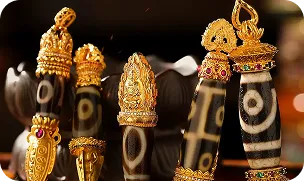
Material
Primarily agate or related quartz, often exhibiting regular or irregular internal banding.
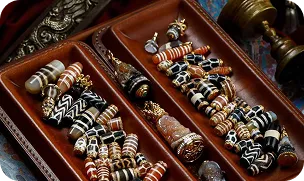
Color
Typically black, brown, gray, or white, with distinctive whitening effects produced through manual processing.
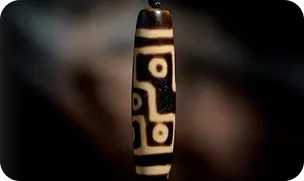
Texture
Surfaces, worn by time, acquire a soft patina that conveys an understated antiquity.
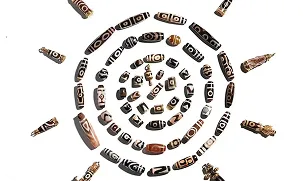
Form
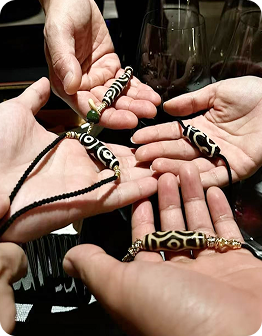
Common shapes include cylindrical, olive, and barrel types of varying size, most designed for ease of wearing.
Quality Control Process
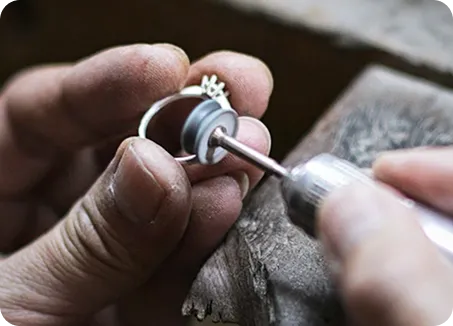
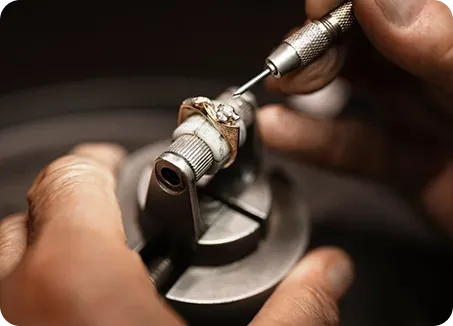
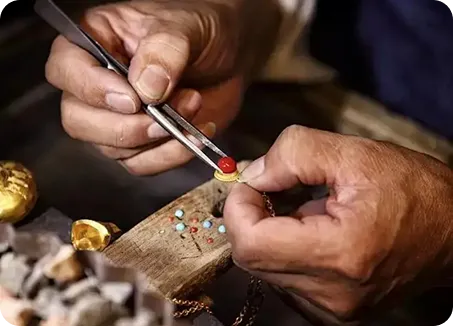
The production process of Dzi is complex. It was originally polished from conch fossils, but due to the rarity of fossils, ancient Tibetan people began to use rocks containing agate to polish Dzi The raw materials of Dzi are natural, but the final formation involves human processing and production, including polishing, pattern design and firing, polishing, punching, etc. It can be said that dzi is a product of the combination of natural materials and artificial skills.
Conservation And Restoration Of Beads
Because dzi beads are composed of natural agate-like minerals, long-term wear and environmental exposure often lead to cracks, abrasion or changes in color. Modern collectors adopt several methods of preservation and restoration:

Cleaning and Maintenance
Wiping with a soft cloth while avoiding chemical agents or exposure to high temperatures.

Storage Conditions
Maintaining low humidity, stable temperature, and protection from light to prevent weathering or fading.

Restoration Techniques
In cases of serious damage, professional Alling or micro-restoration may be applied, but all interventions must adhere to the principle of "preserve the original," without altering the bead's authentic features.
Through scientific preservation, dzi beads can be sustained not only in their material longevity but also in the integrity of their historical and cultural significance
Combining Handmade Carving With Modern Design
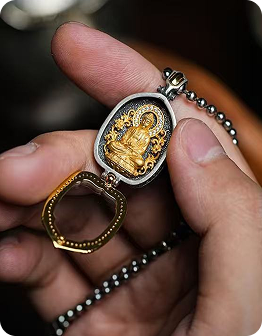
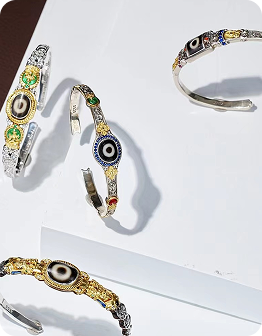
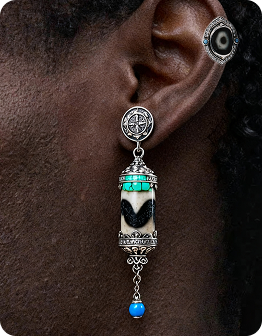
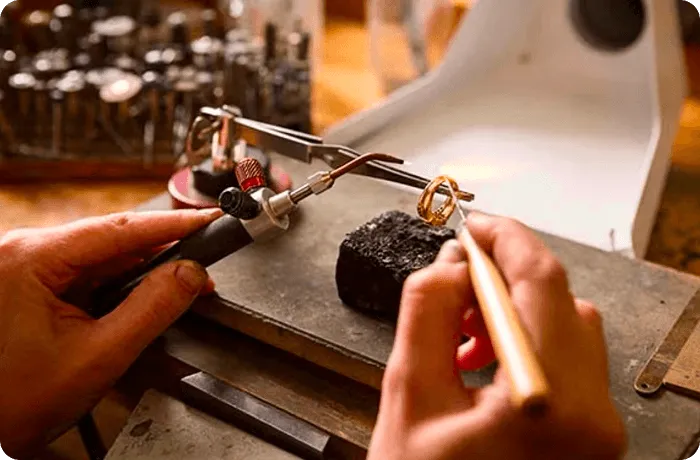
Where tradition meets modernity, each Dzi bead is reborn. Under the artisan’s precise hand, ancient agate is carved with millennium-old symbols; our designers then reinterpret them with clean lines, weaving heritage into contemporary style. We honor the warmth of hand-carving and embrace modern aesthetics. More than jewelry, it’s wearable wisdom and blessing. Each piece is unique—a bridge between the past and the present.
Quality Assurance
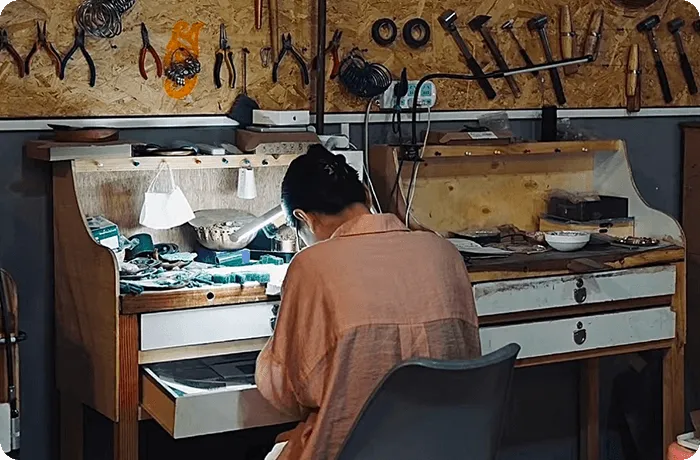
Every Dzi bead is a promise of craftsmanship. From selecting natural agate to the artisan’s focused hand-carving of ancient symbols, followed by precise polishing and drilling—we oversee every step from raw stone to finished piece. Traditional techniques meet modern quality control, ensuring each line is clear and every bead is solid yet smooth. More than an ornament, it is a heritage of trust, crafted to last through time.